Best Drones to Buy in 2026 (Price, Camera, Range)
If you want to buy a drone in 2026 but don't know where to start, this guide ranks the six best from the most premium to the cheapest. Each one is a camera drone you can actually recommend, and we tell you plainly who it is for, what it does well, and where it falls short. We flew, compared, and cross-checked specs and real owner feedback so you don't have to.
Money no object: DJI Mavic 4 Pro. Best for most people: DJI Air 3S. Best under 250 g: DJI Mini 5 Pro. Best value sub-250 g: DJI Mini 4 Pro. Best budget creator drone: DJI Flip. Cheapest way in: DJI Neo.
The 6 best drones in 2026 at a glance
Here is the whole lineup in one table, sorted premium to budget. Prices are shown live, so they always match what the drone actually costs today.
| Drone | Main sensor | Weight | Max flight | Price |
|---|---|---|---|---|
| DJI Mavic 4 Pro | 4/3" Hasselblad, 3 cameras | 1,063 g | 51 min | {PRICE|B0DS2HDF1M} |
| DJI Air 3S | 1", 2 cameras | 724 g | 45 min | {PRICE|B07FVZFX73} |
| DJI Mini 5 Pro | 1", 1 camera | 249 g | 36 min | {PRICE|B0F6XJ7W9M} |
| DJI Mini 4 Pro | 1/1.3", 1 camera | 249 g | 34 min | {PRICE|B0CFF1SJ3P} |
| DJI Flip | 1/1.3", 1 camera | 249 g | 31 min | {PRICE|B0DJ1H6KCP} |
| DJI Neo | 1/2", 1 camera | 135 g | 18 min | {PRICE|B07FTPX71F} |
What actually matters when you buy a drone
Four things separate a real camera drone from a toy: sensor size, flight time, obstacle sensing, and weight. Get these right and everything else is a bonus.
Sensor size is the one most people underrate. A bigger sensor holds more detail in shadows and shoots cleaner in low light. The jump from a 1/1.3-inch sensor, to a 1-inch sensor, to a Four Thirds (4/3") sensor is the difference between a snapshot and a photo you can print big.
Weight matters for a different reason: rules. In the United States, any drone that weighs 250 grams or more must be registered with the FAA and broadcast Remote ID when flown recreationally. Drones under 250 grams skip that step for hobby flying. We cover this in full lower down.
1. DJI Mavic 4 Pro - the premium flagship
The DJI Mavic 4 Pro is the best drone you can buy in 2026 if image quality is all that matters and budget is not. It is a meaningful step up from the older Mavic 3 Pro that held this spot before.
The headline is the camera. It uses a three-camera system built around a 100MP Hasselblad wide-angle on a large 4/3-inch sensor, plus a 70mm medium telephoto and a 168mm long telephoto. It shoots 6K/60fps HDR video, and the main sensor gives you true 25MP stills - real detail, not pixel tricks. Flight time is 51 minutes, the longest of any foldable consumer drone, and its obstacle sensing uses six low-light cameras plus front LiDAR to spot thin branches in near-darkness. You can confirm these figures on the official Mavic 4 Pro spec sheet.
Long-term owners describe it well: it does not wow you on day one, but three months in it becomes the drone you keep reaching for. On Reddit, pilots single out its surprisingly clean low-light footage. The honest complaint is that the two telephoto lenses can look a little soft, and some owners feel that is a lot to forgive on a drone this expensive. It is also big and heavy at over a kilo, so it needs FAA registration and a proper bag.
- Best-in-class image quality and low light
- 51-minute flight time you can feel
- Three focal lengths for real framing choices
- Telephoto lenses can look slightly soft
- Heavy - needs FAA registration and a bag
- Premium price for a few small flaws
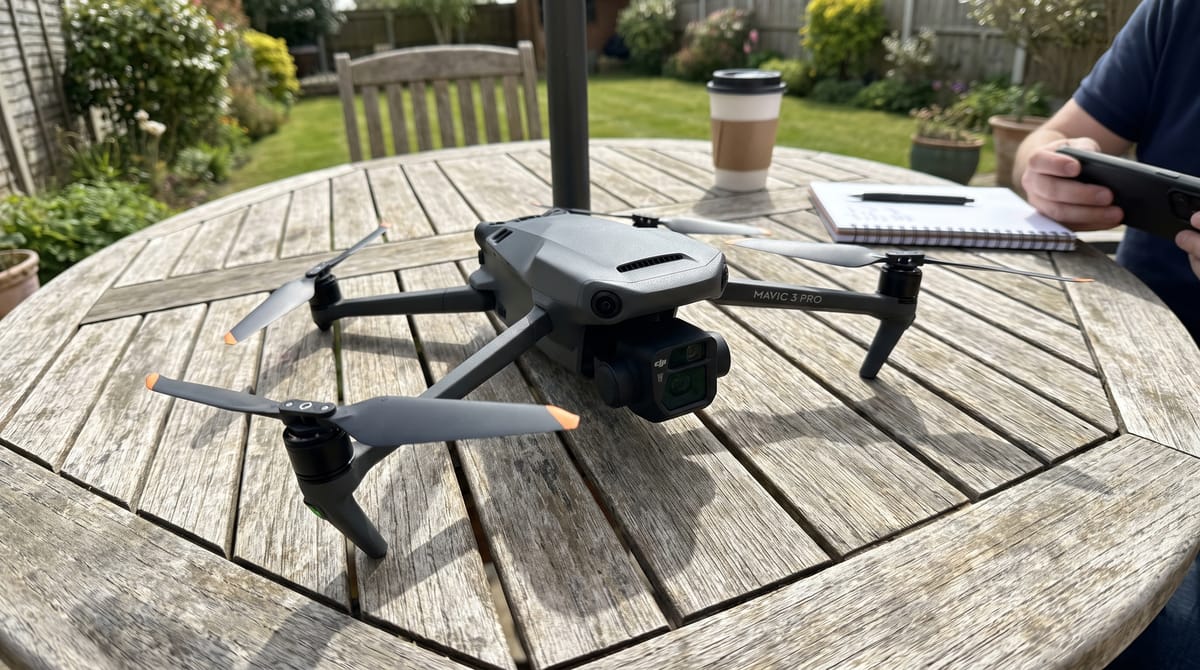
On a tighter budget, the older DJI Mavic 3 Pro shares the same 4/3 Hasselblad main camera and a similar triple-lens setup. It gives up some flight time and the newest tracking, but it is a proven workhorse and often much cheaper.
{PRODUCT|DJI Mavic 4 Pro|B0DS2HDF1M}
2. DJI Air 3S - the best drone for most people
The DJI Air 3S is the sweet spot of the whole range. It sits between the tiny Mini series and the pro-grade Mavic, and for most buyers it is the smartest place to put your money.
You get two cameras: a 1-inch wide-angle main camera and a 70mm medium telephoto, both shooting 4K/60fps HDR with up to 14 stops of dynamic range. Flight time is a strong 45 minutes, and it adds omnidirectional obstacle sensing with forward LiDAR for safer flying at dusk. It is heavier than a Mini at 724 g, so it needs FAA registration, but that weight is also why it handles wind far better.
Owners are some of the happiest in the DJI range. On Amazon and Reddit alike, the recurring line is that it feels like the best value in the sky - praise for the camera, the stable hover in gusts, and the long battery life. The common gripes are minor: the occasional signal drop, and the fact that you will want two microSD cards (one for the drone, one for the screen remote). Reddit's standard advice sums it up - if you need more wind stability than a Mini can give, step up to the Air 3S.
{PRODUCT|DJI Air 3S|B07FVZFX73}
3. DJI Mini 5 Pro - the best drone under 250 grams
The DJI Mini 5 Pro is the one to pack when weight and travel rules decide everything. It is the first sub-250 g drone with a proper 1-inch sensor, so you get near-Air image quality in a body that slips into a jacket pocket.
That 1-inch, 50MP sensor is a big step over earlier Minis, and the camera module rotates 90 degrees for true vertical photos and video. Flight time is 36 minutes on the standard battery (up to about 52 minutes with the larger Plus battery, where sold), and it finally adds omnidirectional obstacle sensing with forward LiDAR - the best safety kit ever put in a Mini. It weighs about 249 g, right on the sub-250 g line.
Owners are genuinely enthusiastic. The community consensus is that the 1-inch sensor is a huge improvement and that the obstacle avoidance makes it far less likely to hit a wire or branch. The honest downsides are physics: it is so light that it struggles in strong wind, and single frames bin down to 12.5MP, so they hold less detail than a larger-sensor drone. If you often fly in gusts, owners will tell you to get the Air 3S instead.
{PRODUCT|DJI Mini 5 Pro|B0F6XJ7W9M}
4. DJI Mini 4 Pro - the best value under 250 grams
The DJI Mini 4 Pro was the top pick for most people before the Mini 5 Pro arrived, and it is still an excellent buy - especially if you find it cheaper than its newer sibling.
It carries a 1/1.3-inch 48MP sensor, shoots 4K/60fps HDR with 10-bit D-Log M color, and was the first Mini with omnidirectional obstacle sensing in every direction. Flight time is 34 minutes, and at 249 g it skips FAA registration for hobby flying. The main thing you give up versus the Mini 5 Pro is the larger 1-inch sensor and the rotating camera.
This drone has one of the best reputations in the whole DJI range. Long-term owners report the build holds up well despite a plasticky feel - plenty survive brushes with tree branches - and the O4 transmission stays rock-solid past 3 km. The most common complaint is a green lens flare when you shoot straight into the sun, which about one in five owners mention. A few also note real-world flight lands closer to 30 minutes than the rated 34.
- Excellent value for the image quality
- Full obstacle sensing and reliable signal
- Tough enough to survive small knocks
- Green lens flare shooting into the sun
- Real flight time nearer 30 minutes
- Smaller sensor than the Mini 5 Pro
{PRODUCT|DJI Mini 4 Pro|B0CFF1SJ3P}
5. DJI Flip - the best budget creator drone
The DJI Flip is the drone for vloggers and beginners who want premium image quality at a friendly price. It is an oddball with full ducted propeller guards, which makes it one of the safest drones to fly indoors or close to people.
Under the guards sits the same style of 1/1.3-inch 48MP sensor found in the Mini 4 Pro, shooting 4K/60fps HDR with a full gimbal and D-Log M color for people who like to color grade. It also does true vertical video, so it is made for TikTok and Instagram. It weighs under 249 g and supports palm takeoff, so you can launch it straight from your hand with no sticks.
Here is the honest catch, and it is a real one: the Flip only has forward and downward obstacle sensing - no side or rear sensors - and that protection switches off during subject tracking. So while the prop guards keep it safe up close, you have to fly it carefully when it moves sideways or backward. Real flight time also lands around 18 to 22 minutes rather than the rated 31 minutes, because the guards add drag. Some reviewers argue that if you mainly want a follow drone, a Neo-style model does the job for less - but nothing else at this price gives you a full gimbal and log color.
{PRODUCT|DJI Flip|B0DJ1H6KCP}
6. DJI Neo - the cheapest way into the sky
The DJI Neo is the cheapest drone here and the easiest to fly. At just 135 grams it is the lightest pick by far, and it is built for selfies and quick social clips rather than serious photography.
It launches from the palm of your hand, and it does not even need a remote - you push a button, pick a shot (like a circle around you), and it flies the pattern and comes back. It shoots stabilized 4K video from a small 1/2-inch 12MP sensor. That is enough for phone-first content, but it is a clear step below the 1-inch drones above.
Owners love it for what it is: tiny, fun, and beginner-proof. The honest limits are a short 18-minute battery (buy the multi-battery bundle straight away), weak performance in wind, and a basic camera that struggles once the light drops. It is not the drone for big, sweeping landscapes - DJI itself suggests flying it close and in calm air.
If you want the cheapest drone that still flies like a "real" one with a controller and a gimbal, look at the DJI Mini 4K instead. It costs a little more than the Neo, keeps things simple, and gives you steadier 4K footage from a traditional drone body.
{PRODUCT|DJI Neo|B07FTPX71F}
Do you need to register your drone?
This is where weight pays off. In the United States, the FAA rule is simple: drones that weigh 250 grams or more must be registered and must broadcast Remote ID when you fly them, even just for fun. Anything under 250 grams skips registration for recreational use. You can check the current rule on the FAA's drone registration page.
| Drone | Weight | FAA registration (hobby) |
|---|---|---|
| Mavic 4 Pro | 1,063 g | Required |
| Air 3S | 724 g | Required |
| Mini 5 Pro | 249 g | Not needed |
| Mini 4 Pro | 249 g | Not needed |
| Flip | 249 g | Not needed |
| Neo | 135 g | Not needed |
Two more things to know. First, even a sub-250 g drone must be registered if you fly it commercially (paid work), and commercial pilots in the US need a Part 107 certificate. Second, recreational flyers of any drone should pass the free FAA TRUST test - it takes a few minutes online and you keep the certificate. Registration itself costs just {MONEY|5} and lasts three years.
Why is this list all DJI?
Fair question. The short answer: DJI simply makes the best camera drones for the money right now, and it dominates the hobby market. Its drones are reliable, easy to set up, and hard to beat on image quality per dollar, which is why nearly every "best drones" list looks like this one.
There are good non-DJI options if you need them. Autel builds capable camera drones with large sensors and no ties to DJI's software. HoverAir makes tiny, self-flying follow cameras that are great for hands-free action clips. Neither brand matches DJI's overall range or value today, but both are worth a look if you specifically want an alternative.
What about FPV and 360 drones?
Two other drone types are worth knowing about, even though they sit outside this premium-to-budget ranking because they do a different job.
You fly wearing goggles that show a live view from the drone, so it feels like you are sitting in the cockpit. It is the most exciting way to fly, but the footage is about speed and motion more than clean, framed photos.
These film everything around the drone at once, so you pick your angle later on the computer - "fly first, frame later." Great for creative reframing, but image quality per shot is lower than a normal camera drone.
If either sounds like your thing, treat it as a fun second drone. For most people who mainly want sharp photos and video, a standard camera drone from the list above is the smarter first buy.
How to pick the right one for you
Match the drone to how you will actually fly. Here is the quick version.
Working pros and filmmakers who want the best image quality and don't mind the size or price.
Most enthusiasts - the best mix of camera, wind-handling, and price in the lineup.
Travellers who want near-Air image quality in a pocket-sized, sub-250 g body.
Best value under 250 g, especially if you find it cheaper than the Mini 5 Pro.
Vloggers and beginners who want palm takeoff, prop guards, and vertical video.
First-timers and selfie shooters on the tightest budget who want zero fuss.
Drone buying FAQs
What is a gimbal, and why does it matter?
A gimbal is the motorized mount that holds the camera steady while the drone moves. Without it, every gust and turn shows up as shaky footage. Every drone in this guide has a real gimbal - if a cheap drone you are eyeing does not, skip it.
What counts as good flight time?
Anything around 30 minutes or more is good for a camera drone. Battery chemistry limits how far this can go, so do not expect an hour. The smarter move is to buy a spare battery or two rather than chase the highest number on the box.
Do I need a licence to fly?
For fun flying in the US, you do not need a full licence, but you should pass the free FAA TRUST test. For paid work, you need a Part 107 certificate. Rules differ by country, so check your local aviation authority before you fly somewhere new.
Is a cheap drone ever worth it?
Below about {MONEY|100}, most drones are toys that fly poorly and break fast. The DJI Neo and Mini 4K show you can spend a little more and get something that actually flies well and shoots usable video. Start there rather than with a no-name toy.
The verdict
For most people, the DJI Air 3S is the one to buy - the best blend of camera quality, wind stability, flight time, and price. If money is no object and you shoot for a living, step up to the DJI Mavic 4 Pro. On a tight budget, the DJI Neo gets you flying for the least.
{BUY|B07FVZFX73}The bottom line
The best drone in 2026 is the one that fits your budget and how you fly. Spend big and the Mavic 4 Pro gives you the finest image quality in the sky. Spend sensibly and the Air 3S is the pick most people will be happiest with. Watch your weight limits, buy a spare battery, and pass the free TRUST test before your first flight - then go fly.